Table of Contents
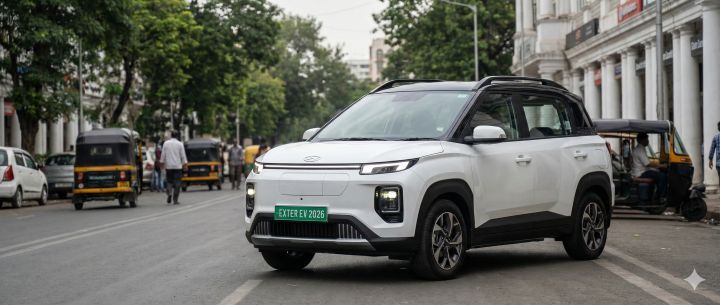
Hyundai Exter EV 2026: Complete In-Depth Review
Introduction
Electric vehicles are no longer the future in India — they are the present. By 2026, the Indian EV market has matured significantly, with buyers actively looking for affordable, reliable, and practical electric cars for daily use. In this rapidly growing space, Hyundai is expected to make a strong move with the Hyundai Exter EV 2026.
The Hyundai Exter has already gained popularity as a compact SUV in the petrol segment. Its boxy design, city-friendly size, and feature-rich cabin made it a hit among young buyers and small families. Now, Hyundai is preparing to take this success forward by launching the electric version of the Exter, aimed at urban India.
The Hyundai Exter EV 2026 is expected to be positioned as one of the most affordable electric SUVs in the country. It will directly compete with models like Tata Punch EV and Citroën eC3, offering Hyundai’s trusted quality, wide service network, and modern EV technology.
In this detailed article, we will explore everything you need to know about the Hyundai Exter EV 2026 — expected price in India, battery options, driving range, real-world performance, charging time, features, safety, maintenance, government EV benefits, and much more. This guide is written in simple, conversational Indian English, making it easy for anyone to understand, even if you are new to electric vehicles.
Overview of the Vehicle
The Hyundai Exter EV 2026 is expected to be a compact electric SUV designed mainly for city driving, with occasional highway usage. Hyundai’s strategy with the Exter EV is clear — make electric mobility accessible to a wider audience without compromising on style, comfort, or safety.
Key Highlights at a Glance
- Compact electric SUV for urban India
- Expected range suitable for daily commuting
- Affordable pricing compared to larger EVs
- Modern design with EV-specific styling
- Feature-loaded cabin with connected technology
- Hyundai’s proven reliability and service support
Hyundai is likely to use a modified version of the Exter’s existing platform, adapted for electric power. This helps keep costs under control while ensuring good interior space and driving comfort.
Price in India 2026
One of the biggest questions around the Hyundai Exter EV 2026 is its price. Hyundai understands that price sensitivity is extremely high in the Indian EV market, especially in the compact car segment.
Expected Price Range
| Variant | Expected Ex-Showroom Price (India, 2026) |
|---|---|
| Exter EV Base | ₹9.5 lakh – ₹10 lakh |
| Exter EV Mid | ₹10.5 lakh – ₹11.5 lakh |
| Exter EV Top | ₹12 lakh – ₹13 lakh |
Note: Prices may vary depending on state subsidies and government incentives.
If Hyundai manages to price the Exter EV aggressively, it could become one of the best-selling electric cars in India by 2026.
On-Road Price Estimate
Depending on the state you live in, road tax and EV subsidies, the on-road price could range between:
- ₹10 lakh to ₹14 lakh
States like Delhi, Maharashtra, Gujarat, and Tamil Nadu may offer additional benefits, reducing the effective price further.
Battery Options
Hyundai is expected to offer multiple battery options with the Exter EV 2026 to cater to different buyer needs.
Expected Battery Variants
| Battery Pack | Capacity | Suitable For |
|---|---|---|
| Standard Battery | ~25 kWh | Daily city commute |
| Long-Range Battery | ~35 kWh | City + highway use |
The smaller battery variant will focus on affordability, while the larger battery option will appeal to buyers who want extra range and flexibility.
Battery Technology
- Lithium-ion battery pack
- Liquid-cooled system for better thermal management
- Designed for Indian weather conditions
- IP67-rated for water and dust resistance
Hyundai’s experience with EVs like the Kona Electric globally gives confidence in battery reliability and safety.
Driving Range
Range anxiety is one of the biggest concerns for EV buyers. Hyundai is expected to address this with competitive range figures for the Exter EV 2026.
Claimed Range (Expected)
| Battery | Claimed Range (ARAI) |
|---|---|
| 25 kWh | 280 – 300 km |
| 35 kWh | 380 – 400 km |
These figures are expected under ideal test conditions. Real-world range will vary based on driving style, traffic, weather, and air-conditioning usage.
Real-World Range Expectations
In everyday Indian driving conditions, the real-world range is what truly matters.
Expected Real-World Range
| Driving Condition | 25 kWh Battery | 35 kWh Battery |
|---|---|---|
| City (Eco mode) | 220 – 250 km | 320 – 350 km |
| Mixed Use | 200 – 230 km | 300 – 330 km |
| Highway | 180 – 210 km | 270 – 300 km |
For most city users, even the smaller battery variant should comfortably handle a week of daily commuting on a single charge.
Charging Options and Charging Time
Charging convenience plays a crucial role in EV adoption. Hyundai is expected to provide flexible charging solutions with the Exter EV 2026.
Charging Options
- Standard 3.3 kW AC home charger
- Optional 7.2 kW AC fast charger
- DC fast charging support (up to 50 kW expected)
Charging Time Estimates
| Charger Type | Charging Time |
|---|---|
| 3.3 kW AC (0–100%) | 7–9 hours |
| 7.2 kW AC (0–100%) | 4–5 hours |
| DC Fast Charger (10–80%) | 45–60 minutes |
Hyundai may also offer installation support for home chargers, making ownership hassle-free.
Performance and Driving Experience
The Hyundai Exter EV 2026 is expected to deliver smooth, silent, and responsive performance — ideal for Indian traffic conditions.
Expected Performance Specs
- Electric motor output: 95–120 PS (depending on variant)
- Instant torque delivery
- 0–60 km/h in under 6 seconds
- Top speed: ~140 km/h
Driving Modes
- Eco Mode – Maximum efficiency
- Normal Mode – Balanced performance
- Sport Mode – Quick acceleration
The low centre of gravity due to the battery pack will improve stability and handling compared to petrol versions.
Exterior Design
Hyundai is likely to give the Exter EV a distinct visual identity while retaining its SUV-like stance.
Expected Exterior Highlights
- Closed-off EV-style front grille
- LED DRLs and projector LED headlamps
- EV-specific alloy wheels
- Dual-tone paint options
- Roof rails for SUV appeal
- Rear LED tail lamps with EV badging
The overall design will be youthful, modern, and urban-focused — perfect for Indian cities.
Interior and Comfort
Inside the cabin, the Hyundai Exter EV 2026 is expected to feel premium for its segment.
Cabin Highlights
- Dual-tone dashboard design
- Flat-bottom steering wheel
- Premium fabric or leatherette seats (top variant)
- Rear AC vents
- Adjustable rear headrests
Space and Practicality
- Comfortable seating for 4 adults
- Decent legroom and headroom
- Boot space suitable for daily needs
- Foldable rear seats for extra luggage
Hyundai is known for interior quality, and the Exter EV should continue that tradition.
Technology and Smart Features
Hyundai will pack the Exter EV 2026 with modern tech and connected features.
Expected Features List
- 10.25-inch touchscreen infotainment system
- Wireless Android Auto and Apple CarPlay
- Fully digital instrument cluster
- Hyundai BlueLink connected car technology
- Voice commands
- Over-the-air (OTA) updates
- Smartphone app for charging status and vehicle tracking
These features will make the Exter EV feel future-ready.
Safety Features
Safety is a strong focus area for Hyundai, and the Exter EV 2026 is expected to offer solid protection.
Expected Safety Features
- 6 airbags (top variant)
- ABS with EBD
- Electronic Stability Control (ESC)
- Hill Start Assist
- Rear parking camera and sensors
- ISOFIX child seat mounts
Hyundai may also target a good Bharat NCAP safety rating for the Exter EV.
Running Cost Advantage
One of the biggest advantages of owning an EV is the low running cost.
Cost Comparison (Per km)
| Vehicle Type | Approx Cost per km |
|---|---|
| Petrol Car | ₹7 – ₹9 |
| Diesel Car | ₹6 – ₹7 |
| Hyundai Exter EV | ₹1 – ₹1.5 |
For someone driving 1,000 km per month, the savings can be massive over the long term.
Maintenance Benefits
Electric vehicles have fewer moving parts, which means lower maintenance.
Maintenance Advantages
- No engine oil changes
- No clutch or gearbox issues
- Fewer wear-and-tear parts
- Lower service costs
Hyundai is expected to offer long battery warranty, possibly up to 8 years or 1.6 lakh km.
Pros and Cons
Pros
- Affordable electric SUV
- Good real-world range
- Low running and maintenance cost
- Hyundai’s reliability and service network
- Feature-rich cabin
Cons
- Not suitable for frequent long highway trips
- Charging infrastructure still growing in some areas
- Boot space may be limited due to battery placement
Who Should Buy
The Hyundai Exter EV 2026 is ideal for:
- City commuters
- First-time EV buyers
- Small families
- Office-goers with daily fixed routes
- Buyers looking to reduce fuel expenses
If your daily running is within 40–60 km, this EV makes a lot of sense.
Government EV Benefits in India
The Indian government continues to promote EV adoption through various incentives.
Key Benefits
- Lower GST on EVs (5%)
- State-level subsidies
- Road tax and registration fee exemptions
- Support for charging infrastructure
For updated policies and schemes, you can check:
Hyundai’s official updates can be found at:
Comparison with Rivals
Hyundai Exter EV vs Tata Punch EV (Expected)
| Feature | Exter EV | Punch EV |
|---|---|---|
| Price | Lower (Expected) | Slightly higher |
| Design | Youthful SUV | Rugged SUV |
| Range | Up to 400 km | Similar |
| Features | Hyundai tech | Tata safety focus |
You can also read our detailed internal review here:
Tata Punch EV 2026 Review
Final Verdict
The Hyundai Exter EV 2026 has the potential to become a game-changer in the affordable electric SUV segment in India. With competitive pricing, decent range, modern features, and Hyundai’s strong brand trust, it ticks most of the right boxes for urban buyers.
If Hyundai manages to price it aggressively and ensure good after-sales support, the Exter EV could easily become one of the top-selling EVs in India by 2026.
Conclusion
Electric mobility in India is evolving rapidly, and 2026 will be a crucial year for mass-market EVs. The Hyundai Exter EV 2026 represents a big step towards making electric cars mainstream for Indian households.
It offers a practical driving range, low running costs, modern features, and the peace of mind that comes with owning a Hyundai. While it may not replace long-distance diesel cars just yet, for daily city use, it makes perfect sense.
If you are planning to switch to an electric car in 2026 and want something affordable, stylish, and reliable, the Hyundai Exter EV should definitely be on your shortlist.